
Neuromarketing in 2026: How AI, Emotion Analytics & Real-Time Consumer Insights Are Transforming Modern Marketing
Discover how AI-powered neuromarketing is revolutionizing consumer behavior analysis, helping brands optimize campaigns with real-time emotional insights while balancing ethics, privacy, and business growth.
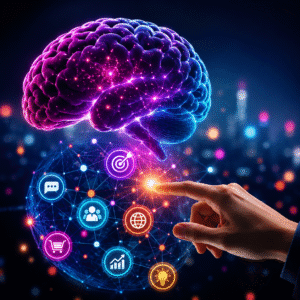
Neuromarketing is a modern science of marketing that uses neuroscience, psychology, artificial intelligence (AI), and consumer behavior to understand how consumers react subconsciously to advertisements, products, packaging, pricing, and brands. Neuromarketing studies unconscious responses using techniques such as Electroencephalography, eye tracking, facial expressions detection, Galvanic Skin Response (GSR), biometrics and AI-based emotion recognition unlike surveys and interviews.
Since approximately 95% of the purchases are driven by emotions on an unconscious level, neuromarketing allows the firms to know exactly what attracts the consumers’ attention and drives their purchases.
Purpose of Neuromarketing
The main goal of neuromarketing is to help companies build more engaging and personalized experiences for their customers.
The aims of neuromarketing are:
- To know the subconscious of consumers
- To measure the emotional involvement of consumers with advertisements
- To improve the packaging of products
- To enhance the pricing strategy of products
- To make the advertisements more effective
- To improve the customer experience
- To boost the conversion rates
- To increase the Return On Advertising Spend (ROAS)
- To reduce marketing guesswork with science
- To build greater emotional connection between brand and customers
Neuromarketing Enters Mainstream from Lab-based Consumer Research
For years, neuromarketing has been confined to expensive laboratory research, where participants have worn heavy EEG caps for several weeks, while researchers studied brain function. Such research produced useful consumer information, but they were cumbersome and expensive.Now things are different. Advances in AI, machine learning, wearables, emotion recognition technology, eye tracking through webcam, and biometric sensors have turned neuromarketing into a business proposition. Now the brands can measure their customers’ emotions in real time in the course of an advertisement. This allows the marketers to perfect their campaigns before investing heavily in advertisements.
Neuromarketing Technologies Pioneering Real-Time Neuromarketing
The neuromarketing environment of today is made up of several technologies:
- EEG (Electroencephalogram)
- Eye Tracking
- AI software for facial coding
- Emotion-detection software
- GSR (Galvanic Skin Response)
- Heart rate measurement
- Predictive analytics powered by AI
- Internet of things (IoT) devices
- VR (Virtual Reality)
- AR (Augmented Reality)
A lot of these technologies can be done with smartphones, webcams, wearables, unlike the traditional lab equipment used in neuromarketing research.
Global Neuromarketing Market Development
Neuromarketing is one of the fastest-growing segments of marketing technology. Recent research indicates that the global neuromarketing market passed the USD 1.5 billion milestone in 2025 and is projected to grow to over USD 2.6 billion by 2033, at a CAGR of approximately 8-9%.
Some reasons for this rapid growth are:
- AI-based analytics use
- Need for customized marketing
- Growth of digital advertising market
- Growth in retail analytics
- Enhanced consumer experience management
- Marketing technology expenditures
The major industries that are adopting neuromarketing technologies are:
- FMCGs
- Shop
- Medical care
- Cars
- Online Shopping
- Entertainment
- Banking / Finance
- Home Appliances